Aircraft broker marketing examples: 3 campaigns built for faster, clearer listings.
Three aircraft sales campaign examples for a speed-first launch, a recent refurbishment, and an owner with no usable marketing assets.
Aircraft broker marketing examples become useful when they begin with a real seller situation. A channel list says very little by itself. The work changes when the broker needs to launch in 48 hours, explain a recent refurbishment, or replace a folder full of phone photos and conflicting specifications.
These three campaign examples show how Airside prepares content for brokers to use. Each starts with approved facts and photography of the actual aircraft. Each ends with files that can move through listings, websites, email, brochures, social posts, and direct buyer follow-up without rebuilding the story.
The examples are working frameworks rather than client case studies. Aircraft facts, prices, serial numbers, maintenance claims, and outcomes remain specific to the real listing and approval process.
Example 1: speed-first listing launch
The broker signs an exclusive listing and needs to reach the market while seller attention and buyer curiosity are fresh. The aircraft is available for one controlled capture window. Approved specifications and review contacts are ready before the shoot.
Airside prioritizes the first 5 to 10 images: three-quarter exterior hero, side profile, cabin forward, cabin reverse, overhead layout when useful, flight deck, galley, lavatory, baggage, and the strongest upgrade or condition detail. For approved rush scope, those images and listing copy can be delivered within 48 hours.
The broker can launch with a focused, useful sequence while a fact sheet, brochure, and landing page continue behind it. Speed comes from pre-approved facts, shot priorities, clear access, and one review owner. Quality still sets the release standard.
Sources: Controller selling workflow
Give the speed-first campaign one memorable hero
A sharp exterior hero should establish aircraft identity immediately. When the campaign needs a stronger visual, Airside can build a custom in-flight composite from photography of the actual aircraft instead of scheduling an expensive air-to-air mission.
The composite preserves the aircraft's established livery and configuration, then carries across the broker website, listing campaign, email header, brochure cover, and approved social assets. The image is labeled as a custom in-flight composite so the presentation remains clear about how it was made.
The hero supports the launch rather than replacing the listing sequence. Buyers still need ground exterior views, honest cabin photography, flight deck, galley, lavatory, baggage, and current condition detail before moving deeper.

Example 2: recent-refurbishment story
A recent paint, cabin, avionics, connectivity, or equipment change creates new value, but the old listing assets still show the previous aircraft. The campaign needs to establish what changed, when it changed, what can be verified, and how the change affects buyer evaluation.
Airside starts with approved refurbishment facts, then rebuilds the image order around those changes. A cabin refresh may move wide cabin views, material condition, tables, sidewalls, lighting, galley, lavatory, and configuration forward. Paint work may require clean exterior identity, profile, leading surfaces, and livery detail before the cabin sequence.
Copy should name the verified work without turning every change into a superlative. Replace old photographs, PDFs, website images, and social graphics together. A strong refurbishment campaign loses credibility when one channel still shows the previous interior or an outdated equipment list.
Sources: IADA Code of Ethics
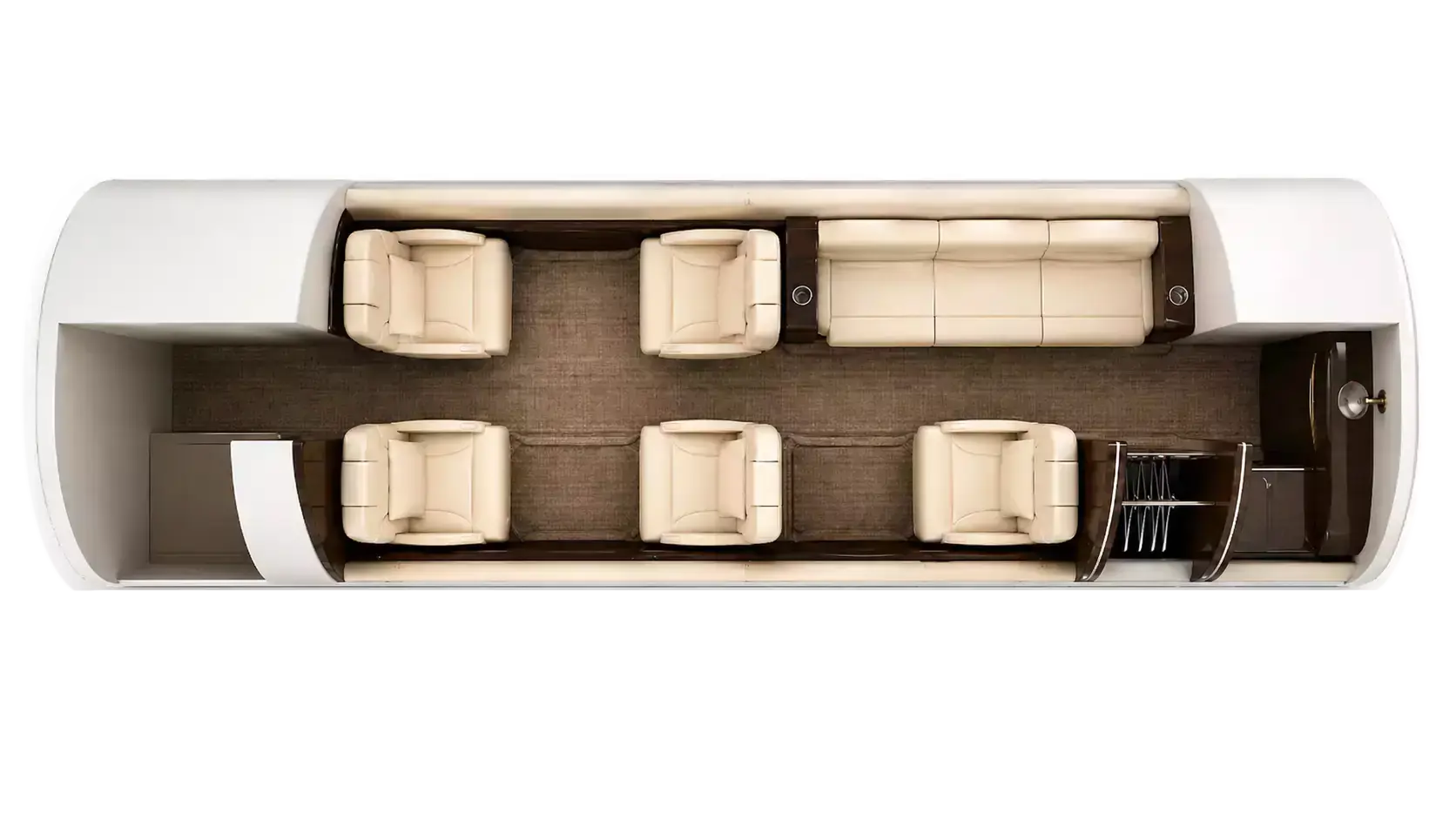
Use a custom overhead layout to explain the cabin
Cabin photography shows materials, light, and condition. An overhead layout answers a different set of questions: where seating groups begin and end, how the aisle moves through the aircraft, where the divan sits, and how galley and lavatory placement shape passenger flow.
Airside builds custom overhead layouts for broker-facing websites, fact sheets, brochures, and follow-up material. The layout should match the actual aircraft configuration and use the same approved seating and cabin facts as the listing.
In charter work, a client reported a meaningful increase in qualified inquiries after clearer aircraft presentation launched, including a custom layout. Airside does not assign an isolated percentage because website, imagery, copy, routing, and timing changed together.
Example 3: owner has no usable marketing assets
The broker receives phone photos, an old brochure, camera filenames, conflicting specifications, and no clear public-use approval. The first job is to establish one aircraft truth set and one approval path before a new listing package is built.
Airside photographs the actual aircraft, writes listing copy from approved facts, creates the first 5 to 10 image sequence, builds a current fact sheet, and prepares a focused aircraft-listing website or landing page. An overhead layout, custom in-flight composite, or confidential 3D exterior view can be added where it helps buyers understand or remember the aircraft.
Delivery separates current files from archive material. Web crops, print files, high-resolution images, captions, descriptive filenames, layout, copy, brochure, and contact assets sit inside one broker-ready folder. The broker can publish and follow up without rebuilding the aircraft from scattered inputs.
Match deliverables to the campaign problem
The speed-first launch needs fast facts, decisive photography, listing copy, and a clean publication path. The refurbishment campaign needs proof of change, updated visuals, accurate upgrade language, and removal of stale material. The no-assets campaign needs a complete source of truth, full capture, new collateral, and version control.
All three can use the same channels: listing platform, broker website, aircraft landing page, email, fact sheet, brochure, social post, and private follow-up folder. The mix changes according to seller timing, buyer questions, approval boundaries, and aircraft value.
Airside owns the production scope. The broker owns pricing, platform publication, buyer list, outreach, inquiry qualification, showings, negotiation, and transaction follow-through. Clear ownership keeps marketing work connected to the sale without drifting into brokerage advice.
Sources: NBAA Aircraft Transactions Guide
Use a reusable aircraft-listing launch checklist
Before capture, confirm seller goal, target buyer, launch date, aircraft access, cleaning, airport or hangar restrictions, approved facts, public-use boundaries, review owner, and required channels. Flag any missing specification or claim that could stop release.
Before publication, confirm first image order, listing copy, price and availability language, broker contact, fact-sheet version, website contact path, image filenames, alt text, composite labels, current folder, archive folder, and approvals for every public surface.
After launch, track repeated buyer questions, missing-image requests, outdated files, response timing, inquiry source, and the broker's definition of a qualified lead. Feed those questions back into the landing page, brochure, photo library, and follow-up package.
Keep the campaign fast, clear, and defensible
The three examples solve different problems, but they share one operating standard. Launch material should move quickly enough to protect listing momentum, explain the aircraft clearly enough to improve buyer conversations, and stay accurate enough to survive deeper review.
A broker should be able to open the current folder, publish the aircraft, answer the first questions, and send follow-up material without asking which photo, specification, layout, or brochure is safe to use. That is the practical test for broker-ready marketing.
Fast enough to protect momentum. Accurate enough to protect trust.
Airside campaign standard
Build around the seller situation
A speed-first launch, recent-refurbishment story, and no-assets rebuild need different production plans. Each becomes easier when approved facts, actual-aircraft photography, image order, custom visuals, websites, collateral, and broker follow-up carry one aircraft story.
Airside builds that content for aircraft sales brokers to use. The result is a faster path from signed listing to market, clearer material for qualified buyers, and fewer files the broker has to repair during live follow-up.
Useful examples include a speed-first listing launch, a campaign built around a recent refurbishment, and a full media rebuild when the owner has no usable assets. Each campaign should connect accurate aircraft facts with photography, image order, listing copy, a fact sheet or brochure, website assets, email, and broker follow-up.